

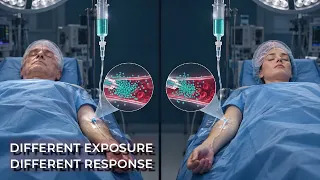

Microlearning •
Introduction to Pharmacokinetics and Pharmacodynamics
A focused introduction to the relationship between dose, plasma concentration, effect-site concentration and clinical response. This lesson integrates the core principles of pharmacokinetics and pharmacodynamics using clinically relevant anaesthesia examples.
Learning objectives
- Define pharmacokinetics and pharmacodynamics and distinguish between them.
- Describe the four components of ADME and explain why intravenous administration bypasses absorption.
- Differentiate dose, plasma concentration, effect-site concentration and clinical effect.
- Explain how redistribution and clearance contribute to recovery after an intravenous bolus.
Take-home messages
- Pharmacokinetics describes what the body does to a drug through absorption, distribution, biotransformation and excretion.
- Pharmacodynamics describes the relationship between drug exposure and a specified physiological response.
- Dose, plasma concentration, effect-site concentration and clinical effect are connected, but they are not interchangeable.
- Early recovery after an intravenous bolus may result from redistribution and ongoing clearance before complete drug elimination.